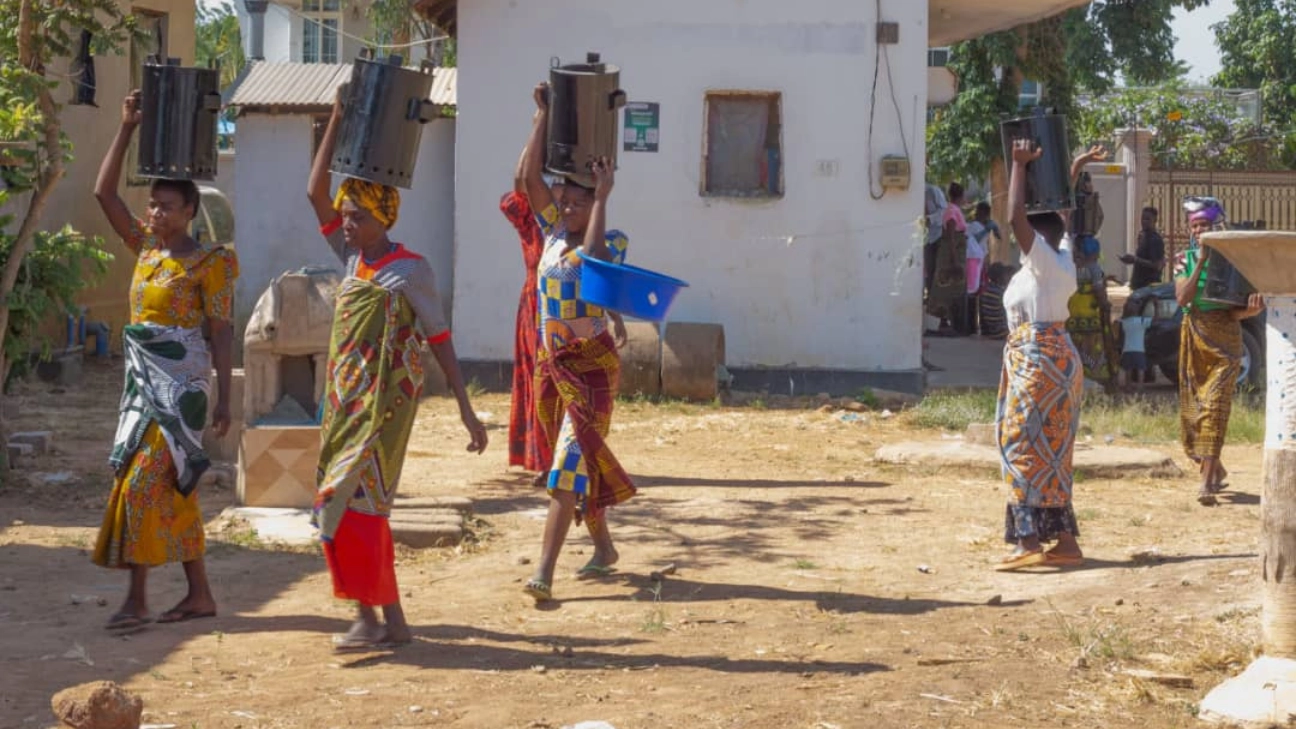
women in kitenge wear carrying modified clean energy cooking stoves

How Tanzlite reframed Chabri Energy, a Tanzanian clean energy company to match its operational scale

Overview

Erlier in 2026, Chabri Energy approached Tanzlite Digital to rebuild a website the company had outgrown. The engagement has since produced a new five-page site, a launched newsletter, and results that arrived faster than either of us expected. The work continues under retainer.

But the website was not the actual project. The actual project was a diagnostic.

The Company

Chabri Energy is a clean cooking company based in Kisesa, Mwanza Region. Founder Bernard Makachia started it in 2018 with a thesis that has since proven correct: Africa's clean cooking transition would not be solved by imported solutions, but by locally engineered systems that fit the realities of African kitchens.

Seven years later, the operational substance was considerable. KuniSMART biomass briquettes deployed across the Lake Zone. JikoSMART gasifier stoves in over a thousand households and food businesses. Institutional brick stove installations built through partnerships with Geita Gold Mine and the Government of Tanzania. Active investee in the FUNGUO Programme, jointly funded by the EU, UK Aid, and UNDP. Engagement with the British High Commission through the Manufacturing Africa initiative. A TZS 50 million presidential innovation award presented by H.E. President Samia Suluhu Hassan at the Africa Energy Summit 2025.

By any reasonable measure, Chabri was a serious clean energy operator with national institutional credentials and regional strength across the Lake Zone. Its website said none of this.

The Gap

The previous site described two products through generic clean cooking claims. "Save Money and Environment with KuniSMART." "A Complete System for Efficiency." Phrasing that could have appeared on any clean cooking website anywhere.

The presidential award did not appear. FUNGUO did not appear. The British High Commission engagement did not appear. The Geita Gold Mine partnership did not appear. The institutional brick stove product line, Chabri's most significant commercial offering, did not exist on the site at all.

The site presented a small SME selling two products. The reality was an operator with regional scale, institutional credentials, and a body of intellectual work on East Africa's energy transition.

The diagnostic was not that the website needed better design. The diagnostic was that Chabri's public presentation was materially undervaluing the company on every dimension that mattered to funders, procurement officers, journalists, and development partners.


The Work

Positioning came first. We settled on: clean cooking, designed to how people already live. This carried Bernard's intellectual position from his existing writing while differentiating Chabri from the LPG-led national conversation dominating East African policy.

Architecture followed. Five pages, not the typical seven or eight. Audience hierarchy: institutions first, development partners second, individuals third. The Cooking Stoves page would lead with institutional brick stoves, Chabri's highest-value offer. The About page would build founder credibility through narrative, not résumé. Institutional partnerships carried at full weight across every page.

Then copy. The organizing principle: every sentence had to earn its place. The result reads like a serious clean energy company headquartered anywhere serious clean energy companies are headquartered, not a generic clean cooking website.

Then supporting assets. Bernard's LinkedIn profile was rewritten to surface the presidential award in the headline and anchor his About section in the founding story. A newsletter, Notes from the Kitchen, was also launched as a permanent home for his intellectual work.
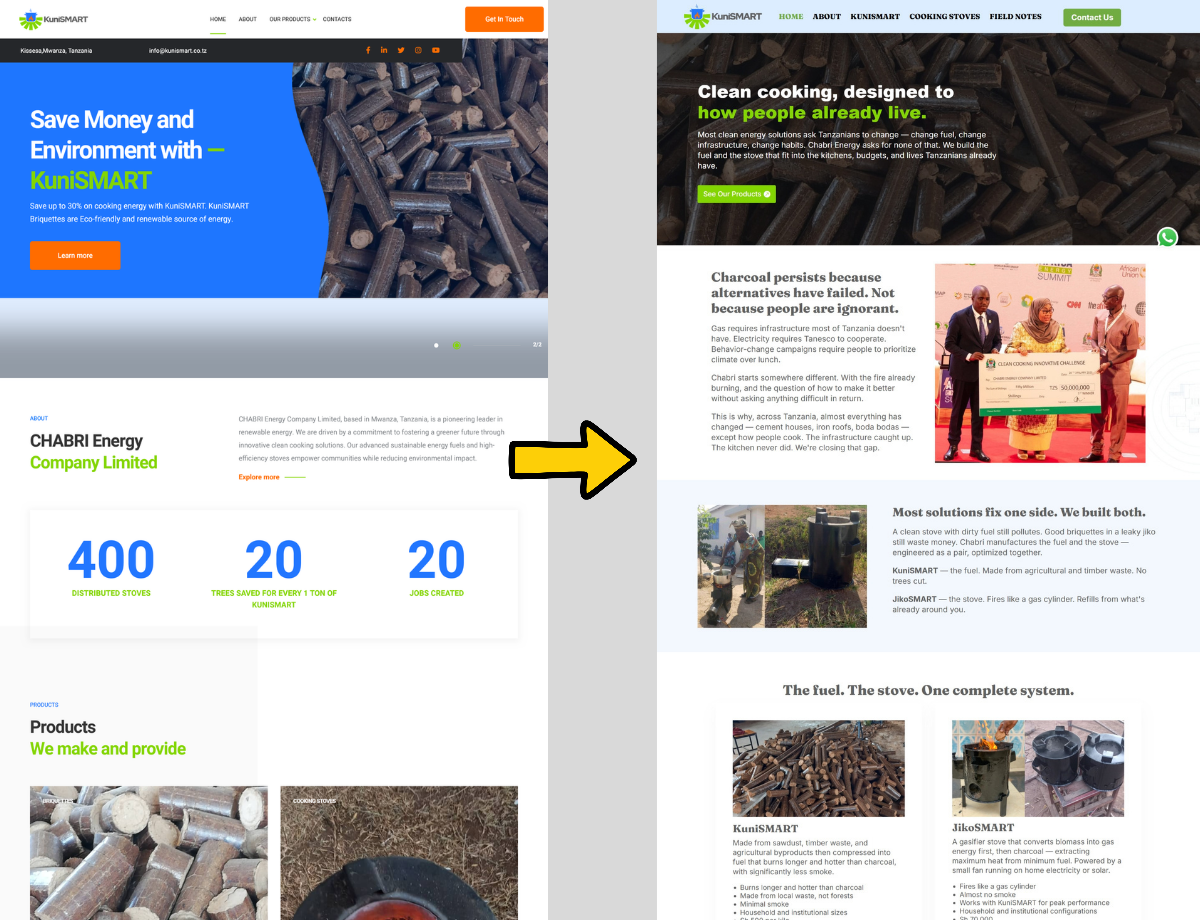
Selected screens

The Outcome

The site launched in early May 2026.

A Swiss consultant embedded with Chabri's institutional partners, encountering the new site, sent unsolicited praise: "love the new website by the way." No commercial relationship with Tanzlite, no incentive to comment. The closest thing to objective validation agency work can receive.

In the second week of May, against a news cycle dominated by rising LPG prices, we drafted a LinkedIn post arguing that single-fuel national strategies were structurally fragile. The post performed substantially above Bernard's average engagement and produced an inbound message within hours from an investor proposing a funding conversation.

The same week, Bernard exchanged substantive comments with the co-founder of a Pan-African LPG company on whether regulatory reform could solve the affordability problem, exactly the kind of peer-respectful, intellectually serious public exchange that builds long-term founder reputation in a sector.
Notes from the Kitchen launched May 15 with its first issue, The Wrong Question, drawing on the same diagnostic that organized the website.
These are early indicators, not proof. That proof accumulates over the months ahead. But they are consistent signals that the work is producing the surface area Chabri needed to be producing all along.

☆☆☆☆☆

"Chabri was operating at one scale and presenting at another. We had the presidential award, the FUNGUO investment, the institutional partnerships, the deployments across the Lake Zone. But our website didn't reflect any of it. Shukuru and the Tanzlite team understood the gap immediately and rebuilt the entire public-facing identity to match the work we actually do. Every page, section, and line was written with discipline. What we got was not a redesign but a repositioning. And the international appeal it gave us in the renewable energy sector is opening conversations we couldn't open before."

Mecktilder M. M.

Bernard Makachia

Founder & CEO, Chabri Energy Limited

The Principle

Most clients have built more substance than their communications reflect. The work is closing the gap between what the company is and how it shows up. Deliverables (websites, profiles, newsletters, calendars) are evidence of the strategic work, not the strategic work itself. We begin with the diagnostic, then build outward.

Chabri Energy was the kind of client this approach exists for. The work continues.